
Visibility Opens Doors
Visibility Opens Doors
After several years of private foundation fundraising in a university setting, one of my strongest takeaways is that funders often see an organization before they engage it.
A few years ago, I was researching an exciting new funder. It had substantial capacity, a spend-down structure, and a website that described its priorities with vivid clarity. Unfortunately, it didn’t offer a direct way to contact staff. That’s not uncommon in philanthropy. Funders signal what matters publicly and then decide, in their own way, where to lean in.
As I dug deeper into the funder’s site, I thought of a university center I knew well. The fit was unusually strong, but there didn’t seem to be any way to contact the funder. It looked like the only option would be a generic info@ inbox with a strict character limit, which is not where anyone dreams of making magic happen. I typed a short note along the lines of: You may want to look at this center. Then I hit send, feeling exactly as sophisticated as that sounds.
The next day, a program officer wrote back.
The note was brief and generous: thank you for reaching out; I’ve been thinking about contacting them; can you help set up a meeting?
That exchange stayed with me because it confirmed something I’d seen before. My outreach didn’t create the opportunity. At most, it gave a small shove to a door that was already unlocked.
What made that possible was the center’s visibility.
Its website had clear messaging. Its leadership and ideas were showing up in public events, university communications, published commentary, media coverage, and the kinds of conversations in the field where funders often begin to form impressions. You could understand what the center was, what it cared about, and why its work mattered. The funder had already noticed. It just hadn’t made contact yet.
I had seen a version of that before.
Years earlier, I was one of four local soccer community members who co-founded FC Tucson, a new club that hoped to bring Major League Soccer preseason to Tucson. At the time, Tucson had just lost Major League Baseball spring training. The city had taken an economic hit, and a civic one too. Soccer, meanwhile, was already here in force: in youth clubs, schools, neighborhoods, and the region’s ties to Mexico. The opportunity was not to invent a soccer culture – but to make it visible.
We decided to be intentional about visibility.
We worked first to generate local attention: local television, local newspapers, local digital coverage, local conversation. We wanted Tucsonans, public officials, and sponsors to see that this was not just four local soccer fanatics with a ball, a scarf, and a dream. We focused on building local support - making a case that Tucson was ready. Then we created an event worth covering. In 2011, an exhibition game drew more than 10,000 fans. That gave us a bigger story to tell and a stronger case to make. Coverage widened across Arizona, followed by national outlets such as The New York Times, The Atlantic, NPR, and others. Then came David Beckham and other major players training and playing in Tucson, which, as media strategies go, is a helpful detail to have break your way.
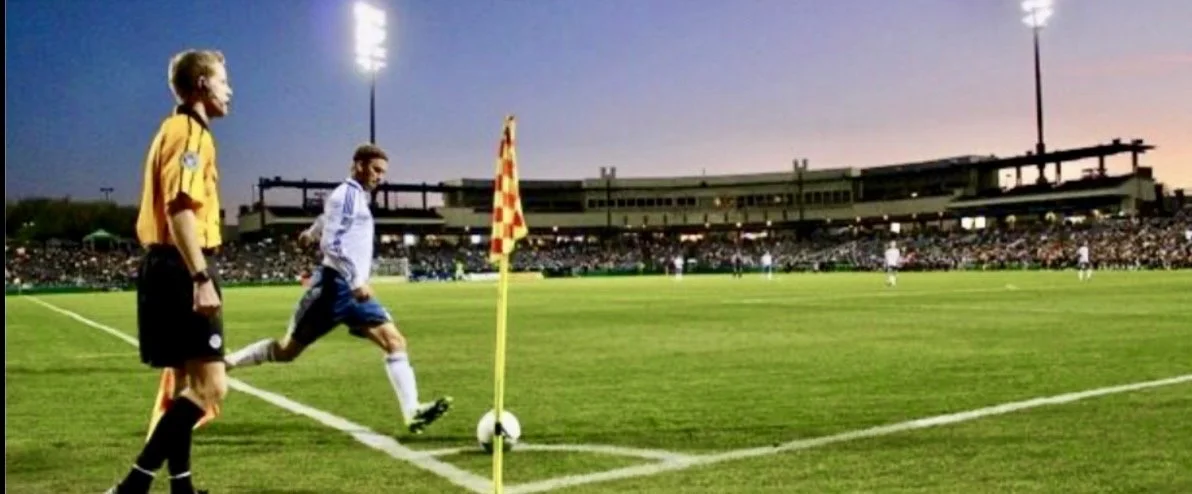
Can Soccer Heal Tucson's Wounds? The Atlantic
The sequence mattered. Local coverage helped local people believe it. Broader Arizona coverage gave the story scale. National coverage told partners, sponsors, public officials, and MLS clubs that this was becoming a real platform. That changed our meetings. People often came in already understanding the outline. They had seen the coverage and knew the story. That recognition helped open doors: county investment in soccer infrastructure, sponsor support, strong attendance, and years of MLS teams returning to Tucson.
Those two experiences were very different. One involved philanthropy in higher education. The other involved soccer, civic partnership, and a city looking for a new story to tell about itself. But the lesson was the same.
In both cases, the work came first, but visibility helped the right people see, understand, and act on it.
That is what we mean at Grant Street Consulting when we say “Visibility Opens Doors.” We help organizations listen and learn, clarify their strengths, and define what matters most—who they serve, what they are learning, what impact they are having, and where they want to go—so they can tell a compelling story on a website, in written materials, through earned media, and in conversations with partners and funders. In philanthropy, that kind of clarity often shapes who gets noticed, understood, and invited into deeper engagement.
Like many of the organizations we serve, the university center and FC Tucson were doing meaningful work. Once that work becomes clear and visible, people are more able to understand it, trust it, and act on it. That is how doors open.
Greg Foster
Senior Consultant, Grant Street Consulting
Greg works with nonprofit organizations and foundations on strategy, fundraising, and positioning.
